




Popular Searches
The Age of Shortcuts
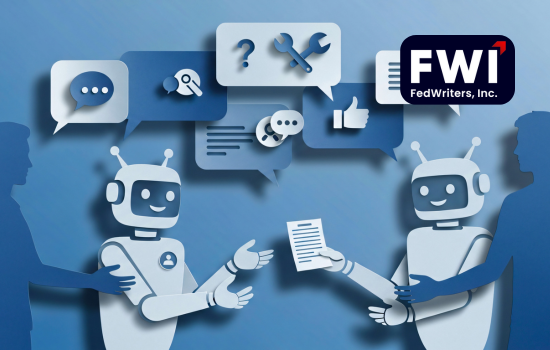
Artificial intelligence (AI) has changed how content is created, accelerating every draft and data pull. Yet a faster process is not always a smarter one. AI is a tool, powerful, scalable, and tireless, but it needs a skilled human to wield it responsibly.
When that human element is missing, quality falters. In 2023, an international university consortium suspended several research papers after an AI text generator fabricated citations and misquoted data. Likewise, a major technology publisher retracted dozens of AI-written finance explainers riddled with calculation errors. Both cases had the common cause that automation was treated as author instead of assistant. The cost was credibility.
Federal agencies are taking a different path by pairing innovation with oversight. Recent guidance from the Office of Management and Budget and the National Institute of Standards and Technology calls for “human-in-the-loop” governance, requiring agency quality assurance reviewers to validate any AI-generated content for factual accuracy, privacy, and accessibility before release. The message is clear: efficiency matters, but accountability comes first.
Across government, this balanced approach is already working. NASA uses language models to draft plain-language summaries of technical findings, then routes them through subject-matter experts before publication. The Department of Veterans Affairs employs AI to flag Section 508 compliance issues, leaving accessibility specialists to make the final fixes. At the General Services Administration, acquisition writers use AI-drafted templates to speed procurements, and every clause still goes through human review. Each example shows AI raising productivity without lowering precision.
Automation can produce words. Only people can ensure they are true. At FedWriters, Inc., we embrace AI as an augmenter, not an author, using technology to enhance the expertise of our people and our clients. Together, we help agencies communicate clearly, comply confidently, and deliver work that earns the public’s trust.